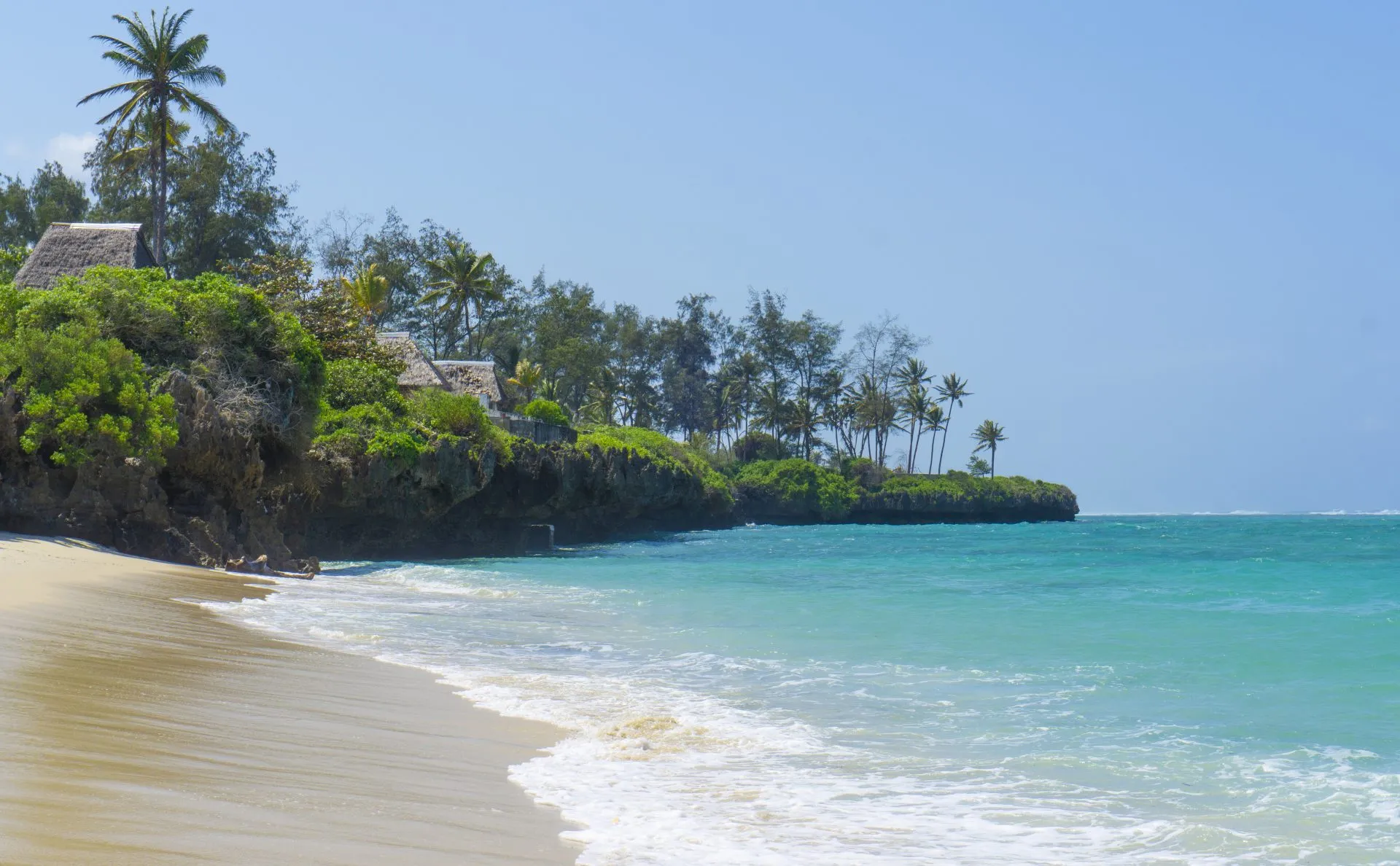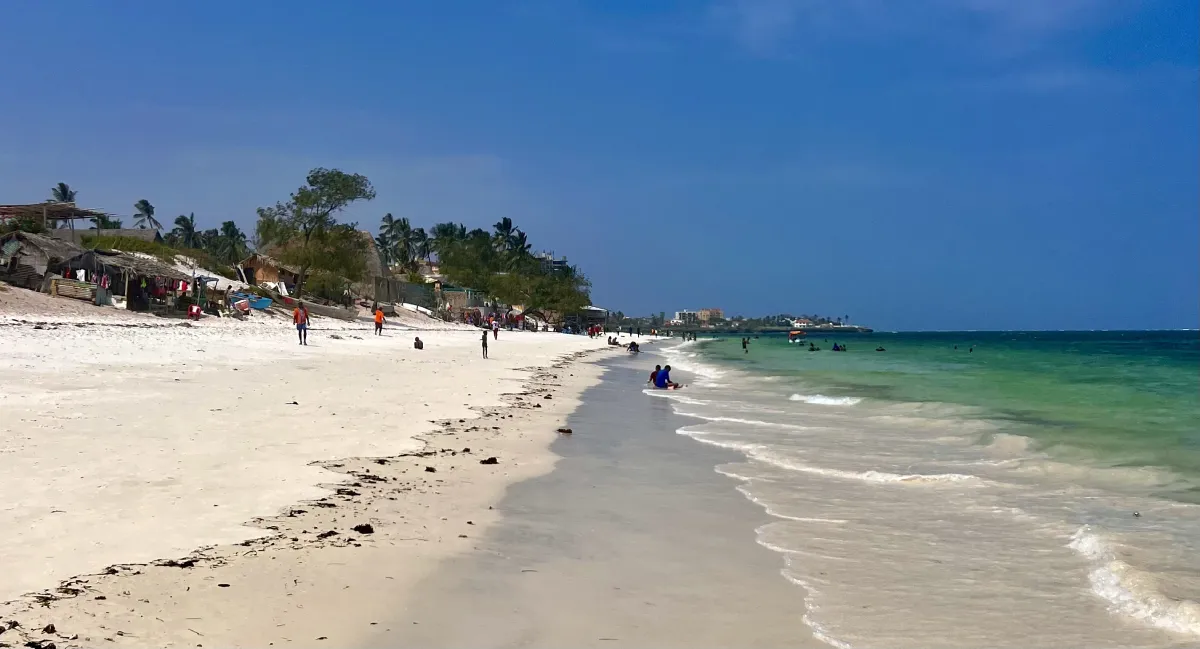
Nyali isn’t just another beach—it’s a coastal lifestyle statement. Located just across the Nyali Bridge from the hustle of Mombasa Island, this upscale neighborhood delivers a perfectly calibrated blend of tropical leisure and urban convenience. With wide, palm-fringed roads, swanky beach resorts, stylish Airbnbs, high-end malls, and a laid-back rhythm of life, Nyali Beach has become Mombasa’s favorite seaside escape. It’s where long weekends turn into extended stays, and where visitors return not just for the views—but for the vibe. Whether you’re a sun-worshipper chasing the perfect tan, a foodie exploring Swahili fusion, or a traveler looking for balance between adventure and calm, Nyali wraps it all in one salty, sunlit package—effortlessly sophisticated, yet unmistakably Kenyan.
The Nyali Beach Experience
Nyali Beach is long, clean, and blessed with soft white sands and warm Indian Ocean waters. Unlike other touristy spots where the beach is overrun with vendors or jammed with resorts, Nyali manages to maintain a sense of space and serenity. The atmosphere is relaxed, with locals and travelers alike strolling the shore, jogging at dawn, or enjoying impromptu volleyball matches. The beach is swimmable during most tides, and the coral reef offshore keeps the waves gentle near the shore.
The morning hours belong to dog walkers, joggers, and yoga enthusiasts who set up their mats close to the water’s edge. By late morning, the beach starts filling with families, sunbathers, and water sports operators. Paddleboards, jet skis, and banana boats are easily available from trusted local vendors, while glass-bottom boats take curious visitors out to explore the reef.
Snorkeling near the reef offers a view into the Mombasa Marine National Park’s underwater wonders—colorful fish, sea urchins, corals, and even the occasional turtle. For those with diving certification, several Nyali-based dive centers organize excursions deeper into the marine park. The water clarity is usually best in the early mornings, and the reef system here is among the most accessible in East Africa.
Beach vendors at Nyali are relatively low-pressure. You’ll be offered madafu (fresh coconut water), grilled maize, beach sarongs, and handmade beadwork. A polite “no, asante” is usually respected. If you’re interested, haggling is expected—and often, half the fun.
Things to Do in Nyali
Mamba Village
East Africa’s largest crocodile farm, Mamba Village is one of Nyali’s most famous attractions. It’s home to hundreds of crocodiles in various stages of life—from baby hatchlings to massive adults that look like prehistoric tanks. The highlight for many is the daily feeding session, where massive jaws snap down on hunks of meat with a sound that’s impossible to forget. The park also features a botanical garden, camel rides for kids, a curio market, and a restaurant that—controversially—serves crocodile meat. Love it or leave it, Mamba Village is uniquely Nyali.
Wild Waters Kenya
Located just off Links Road, Wild Waters is a family-friendly water park that offers a break from the beach without giving up on the fun. The park has a wide variety of water slides, a wave pool, splash areas for kids, and even a lazy river. It’s a top weekend attraction for local families, so weekdays are best for avoiding crowds. The food court inside sells classic Kenyan fast food—think fries, sausages, burgers, and fruit juice. Tickets are affordable, and the park is well-managed with safety guards on duty.
Nyali Golf and Country Club
For travelers who like to swap their sandals for spikes, Nyali Golf Club provides one of Kenya’s most scenic golf experiences. This 18-hole course, established in the 1930s, is shaded by mature trees and offers sea breezes that make even the toughest holes feel bearable. Day visitors are welcome, and rentals are available. The clubhouse serves cold beer, hearty post-game meals, and boasts colonial charm in both service and setting. Even if you don’t play, the serenity and setting are worth a lunch visit.
Mombasa Marine National Park

Snorkeling and diving at the Mombasa Marine Park can be arranged through several experienced operators based right in Nyali. Glass-bottom boats pick up directly from Nyali Beach and cruise out into the crystal-clear waters of this protected marine sanctuary, where fishing is strictly prohibited and coral life flourishes undisturbed.
The reef is vibrant and teeming with more than 200 species of fish, dolphins, octopuses, sea turtles, rays, and the occasional reef shark gliding by. Expect a kaleidoscope of parrotfish, angelfish, and anemones beneath the surface. Visibility is best between January and March when the waters are calm and the sunlight penetrates deep into the reef, though tours are available year-round, depending on sea conditions. Whether you’re a seasoned diver or a first-time snorkeler, Mombasa Marine Park offers a rewarding glimpse into Kenya’s rich underwater world just minutes from the Nyali shoreline.
Eat Your Way Through Nyali
Upscale Dining and Iconic Views

Tamarind Mombasa may be just across the creek, but it’s firmly part of the Nyali experience. With Arabian architecture, impeccable seafood, and a floating dhow restaurant, Tamarind offers fine dining in a timeless setting. Signature dishes include lobster thermidor and crab in Swahili coconut sauce. Pair with a Tamarind Martini and you’ll understand why this place is legendary.
Lookout Bar at Voyager Beach Resort is perfect for a casual drink with a view. Perched above the ocean, the bar gets breezy in the late afternoon and is the ideal place to sip something cold while watching the sun drop below the waves. The cocktails are strong, and the vibe is pure coastal Kenya.
Maroc Swahili Cuisine 001 delivers a more modern, lounge-style atmosphere with shisha, Swahili-Moroccan fusion cuisine, and live DJs on weekends. Located right by the sea, it’s perfect for sunset dinners, romantic dates, or small group meetups. Try their grilled prawns, lamb tagine, and coconut rice—you won’t be disappointed.
Global and Fusion Favorites
Misono Japanese Restaurant is one of Nyali’s most consistently good eateries. Hidden in a leafy garden off Links Road, Misono serves teppanyaki, fresh sushi, and miso soup that rivals what you’d find in Tokyo. The setting is peaceful, and service is always attentive.
Cultura is a trendy indoor-outdoor spot that brings together global flavors with a relaxed boho vibe. It’s great for brunch, cocktails, and casual dinners. Expect dishes like pulled beef tacos, beetroot hummus, and rosemary chicken wings.
Roberto’s Italian delivers hearty, authentic Italian fare with a warm and welcoming feel. It’s family-friendly and consistently busy, thanks to its classic menu of wood-fired pizzas, creamy pastas, and decadent tiramisu.
Cafesserie, located in City Mall, is more than just a café. It’s a full restaurant offering breakfast, lunch, and dinner with a continental menu. Try their eggs benedict or almond croissants in the morning and come back later for their signature beef fillet with herb butter.
Tarboush Grill and Karahi Kitchen are long-time Nyali staples that deliver on flavor and quantity. Tarboush leans into Arabic grills and shawarmas, while Karahi Kitchen serves up Pakistani and coastal Indian curries, chapatis, and naan that arrives hot and bubbling.
Street Food and Local Favorites

No guide to eating in Nyali would be complete without highlighting its street food culture. While Nyali leans upscale, it still knows how to feed you from a plastic stool under an acacia tree.
Head to the area near Total Nyali, Nyali Cinemax, and Nyali Posta where street vendors set up in the late afternoon. Here you’ll find mshikaki (beef skewers), viazi karai (deep-fried potato bites with chili sauce), bhajias, samosas, and mutura (spiced African blood sausage). Prices are local, flavor is maximum, and hygiene is usually decent—though always judge by how busy the stall is.
Thirsty? Try fresh sugarcane juice, passion fruit juice, or a madafu—chilled coconut with a straw in it, cracked open right in front of you.
If you’re more adventurous, venture into Kongowea Market, a short tuk-tuk ride from the beach. This sprawling, chaotic market is Mombasa’s biggest and buzzes with fishmongers, spice traders, butchers, fruit sellers, and Swahili food stalls dishing up biryani, pilau, grilled fish, and tamarind chutneys.
Shopping and Local Vibes
City Mall
Nyali’s primary retail hub, City Mall, offers more than just shopping. Anchored by Carrefour, the mall includes clothing stores, electronics outlets, pharmacies, salons, a cinema, and fast food joints. It’s clean, air-conditioned, and a useful stop whether you’re staying nearby or prepping for a road trip up the coast.
Nyali Centre
Quieter and more compact than City Mall, Nyali Centre is anchored by Chandarana Foodplus and includes Java House, fashion boutiques, a bookstore, and ATMs. It’s convenient, especially if you’re staying on Links Road or Mt. Kenya Road.
Local Art and Curio Shopping
Nyali’s roadside stalls and small curio shops offer souvenirs, décor, and wearable art made by local craftspeople. Look for kikoys, lesos, beaded sandals, soapstone carvings, and colorful Tinga Tinga paintings. Some of the best vendors set up just outside the big resorts or along the stretch between Nyali Cinemax and the Reef Hotel. Don’t hesitate to haggle—it’s expected.
Where to Stay in Nyali
Luxury

Hotel EnglishPoint Marina
Although technically just outside Nyali on the creekfront, it’s close enough to count. This modern property offers luxurious waterfront apartments, a rooftop pool, private marina, fine dining, and stunning views of Fort Jesus and Old Town across the water.
Voyager Beach Resort
This cruise-themed resort is one of the most established in Nyali. With three pools, themed dining nights, kids’ clubs, and an active animation team, it’s ideal for families or those who want everything handled for them. It sits directly on the beach and has expansive gardens and ocean-facing rooms.
Boutique
Bliss Resort
Located along Links Road, Bliss is a solid mid-to-upscale choice with clean rooms, a pool, restaurant, and conference facilities. It’s not beachfront but is a short ride from the sand and offers good value for couples and business travelers.
Sun Africa Nyali Beach Hotel
One of the few true beachfront boutique options, Sun Africa combines traditional coastal design with modern hospitality. The location is excellent for beach walks, and the rooms feel a world away from city bustle.
Armaan Suites and Restaurant
Offering spacious, apartment-style suites, this property is popular with long-stay visitors and those who want a kitchenette. It’s inland but within quick reach of the beach and malls.
Mid-Range

Reef Hotel
A long-time fixture on the beachfront, Reef offers older but spacious rooms, a large pool, and direct beach access. It’s laid-back, family-friendly, and has an unbeatable location just steps from the sand. While it’s not luxury by modern standards, it offers nostalgic coastal charm with a touch of old-school Mombasa character.
Nyali Beach Hotel
Once the toast of Kenya’s coastal elite, Nyali Beach Hotel still retains its retro grandeur. Set on a large oceanfront property with wide lawns, a massive pool, and colonial-era architecture, it’s a reminder of the beach town’s long tourism legacy.
Airbnbs in All Price Ranges
Nyali’s residential charm and leafy boulevards make it ideal for Airbnb travelers. Options range from $25/night studios in secure apartments to $300/night villas with private pools and ocean views. Many properties are in walking distance to the beach, restaurants, and shopping centers. Areas around Greenwood Drive, Links Road, and Nyali Golf Club are particularly popular.
Whether you’re a solo traveler looking for a quiet crash pad or a group needing a spacious home with a pool and chef, Nyali delivers. Most listings include Wi-Fi, backup power, and security—just be sure to check reviews before booking.
Budget
Moffat Court Hotel
Clean, simple, and centrally located, Moffat Court is one of the better-known budget hotels in Nyali. Rooms are functional, air-conditioned, and come with breakfast. Great for backpackers, solo travelers, or business guests on a shoestring.
Also worth considering are budget Airbnbs, homestays, and family-run guesthouses tucked into Nyali’s quiet residential streets. While they might not offer beach views or room service, they make up for it with affordability and often surprisingly warm hospitality.
Getting to Nyali
Nyali Bridge

Nyali is accessible via the Nyali Bridge, the main artery linking Mombasa Island to the mainland’s north coast. Whether you’re arriving from Moi International Airport, the SGR train, or the port, you’ll likely cross this bridge. Expect some congestion during peak hours, but the view across Tudor Creek is gorgeous—especially around sunset.
Infrastructure Developments
A second Nyali Bridge is in planning, aimed at reducing congestion and improving access for the growing number of residents and tourists.
The Northern Bypass project will eventually connect Nyali directly with Shanzu, Mtwapa, and Mombasa Airport—dramatically reducing travel time and bypassing Mombasa Island entirely. Until then, the main access remains through town or via the current bridge.
Malindi Road (B8)
Nyali lies along the Malindi Road, part of the larger B8 highway that continues up the coast toward Kilifi, Watamu, and Malindi. Recently expanded to remove a long-standing traffic bottleneck, this stretch now offers smoother access between Nyali and Mtwapa—dramatically improving travel times to and from the North Coast. The road is well-maintained, lined with businesses, fruit stalls, and local shops, and remains a vital lifeline for both commuters and tourists heading north on scenic coastal road trips.
Getting Around Nyali
Uber and Bolt
Both ride-hailing apps are available in Nyali—but don’t expect Nairobi-style professionalism. Most drivers will call you immediately after accepting the ride to ask:
- “Where exactly are you?”
- “Where are you going?”
- “Are you paying cash or card?”
If you answer “card,” brace for either a delayed pickup or a passive-aggressive cancellation. Cash is king. Card users often report getting mysteriously low ratings despite behaving impeccably.
That said, rides are affordable, especially over longer distances—say, from Nyali to Old Town or Fort Jesus. Always double-check the fare before you hop in.
Tuk-tuks
Nyali runs on tuk-tuks. These three-wheeled workhorses are perfect for beach runs, market trips, or hopping between restaurants and malls. They’re cheap, everywhere, and surprisingly fast. Prices are negotiable unless you book via Bolt, which now includes tuk-tuk options.
Matatus

Matatus—the brightly colored, music-blaring minibuses that define Kenyan public transport—operate on fixed routes along Malindi Road and key arteries like Links Road. They’re cheap, frequent, and bursting with personality, often adorned with graffiti-style murals, LED lights, and booming sound systems that turn every ride into a mobile party. Inside, expect tightly packed seats, quick stops, shouted destinations, and a conductor collecting fares mid-motion. For budget-conscious travelers or those craving an authentic, boots-on-the-ground experience, matatus are a wild but rewarding way to get around. Just don’t expect air conditioning, personal space, or any sense of personal bubble—but you will get a front-row seat to the real rhythm of coastal Kenya.
Final Tips for Enjoying Nyali
Best Time to Visit
The best time to visit Nyali is during the dry seasons: from December to March and again from July to October. During these months, the skies are clear, the sea is calm, and the humidity is manageable. January through March is perfect for snorkeling and diving, thanks to excellent underwater visibility. Avoid April and May if you don’t enjoy rain—this is when the long rains fall and many beach activities may be disrupted.
Safety and Etiquette
Nyali is one of Mombasa’s safest neighborhoods, but basic street smarts still apply. Avoid walking alone at night in dimly lit areas. Leave valuables locked in your hotel safe or hidden if using an Airbnb. Beach vendors are generally polite and not aggressive—just say “hapana, asante” if you’re not interested.
Dress modestly when away from the beach. Swahili culture values respectful attire, especially near mosques and markets. A light scarf or shawl can be handy when entering certain public places or touring more traditional neighborhoods.
Tipping is customary in restaurants (5–10%) and appreciated by hotel staff, beach attendants, and taxi drivers. Kenya uses the Kenyan shilling (KES), and it’s good to carry small denominations for tuk-tuks and market purchases. Credit cards are accepted at most high-end establishments, but cash is still preferred for transport, tips, and local dining.
Internet and Connectivity
Most resorts, hotels, and Airbnbs in Nyali provide decent Wi-Fi. If you’re planning to work remotely from the coast, consider getting a Safaricom SIM card and loading it with data bundles. Coverage is excellent in Nyali, and hotspots are easy to find. Cafesserie and Java House also provide good internet for digital nomads looking to work over coffee.
Why Nyali Is Mombasa’s Sweet Spot
What makes Nyali special isn’t just the beach—it’s the feeling of having everything within reach. It’s the place where upscale blends with authentic, where you can have seafood risotto for lunch and samosas from a roadside stall for dinner. Where your mornings can start with yoga by the ocean and end with shisha under the stars. And it’s all just 15 minutes from the city center.
Nyali manages to walk the line between tourist-friendly and residentially rooted. You won’t find the tourist circus of Diani here, nor the sleepy remoteness of Watamu. Instead, you’ll find a neighborhood that pulses with local life but knows how to welcome visitors—with warmth, with taste, and with just enough tide.
It’s where Mombasa’s elite live, where expats settle in long-term, and where in-the-know travelers return again and again. There’s a reason digital nomads, beach lovers, honeymooners, and even Nairobians escaping the capital all flock here.
Nyali isn’t trying to be a secret. It’s just comfortably confident that if you give it one day, you’ll stay for five.
So, What Are You Waiting For?
Grab your sunscreen, pack a kikoy, and let Nyali Beach welcome you with sea breeze, grilled fish, and a sunset that makes you forget every reason you ever had to rush.
Whether you’re coming for a few days or planning a longer stay, Nyali will meet you where you are—and take you where you need to be.